Pick and set up the right microphone
Good translation starts with good audio. How to pick the right microphone, place it well, and read the LIVE INPUT meter.
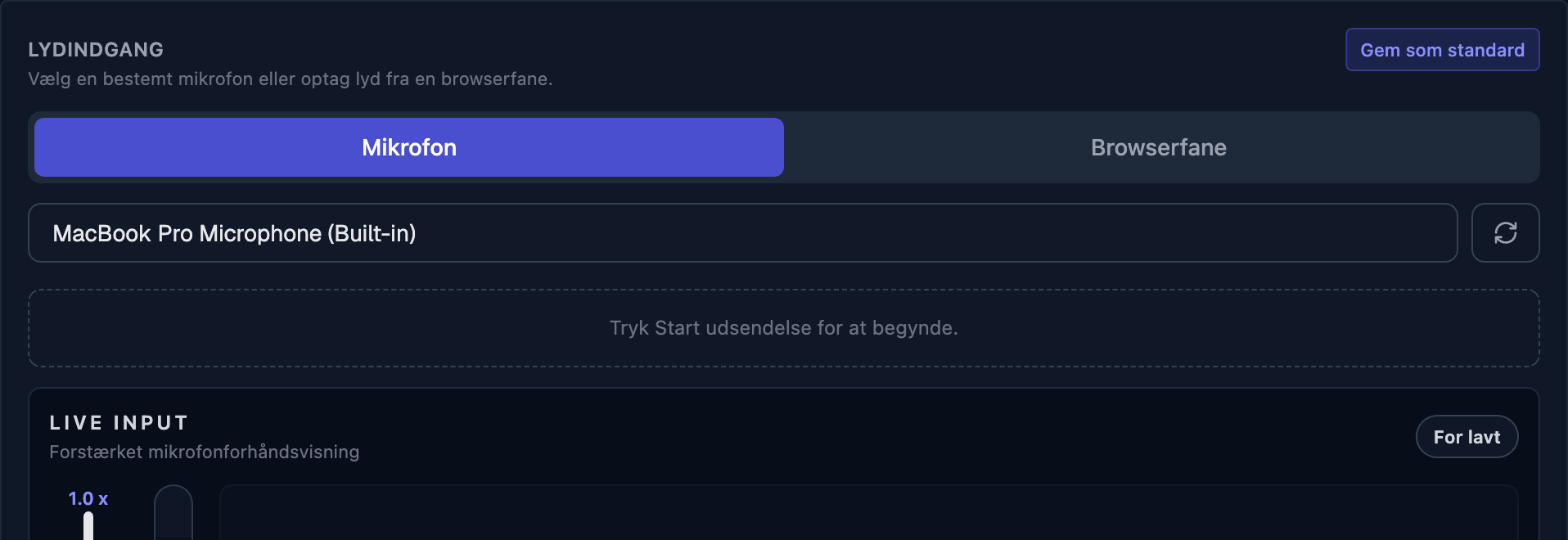
Under Audio input you either pick a specific microphone or capture audio from a browser tab. Use a microphone close to the speaker — a headset or stage mic gives far better translation than the room's echo.
Checklist before you start
Pick the right device
Choose the microphone in the dropdown — an external mic or headset is almost always better than the computer's built-in one when someone speaks from a stage.
Place it close to the mouth
The closer to the speaker, the cleaner the signal. Keep the microphone away from loudspeakers and instruments.
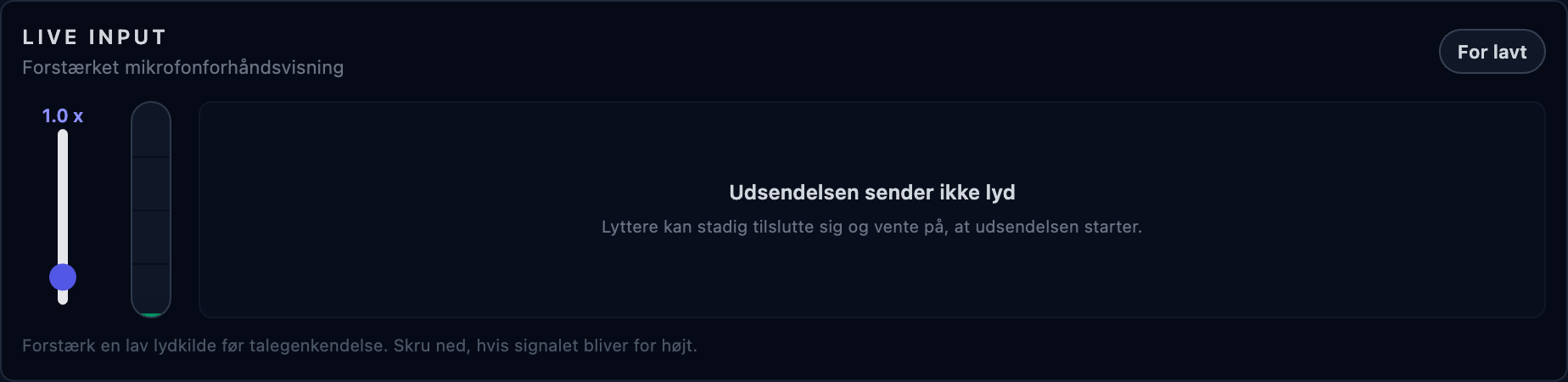
Read the LIVE INPUT meter
Speak at a normal volume and watch the meter. If it shows "Too low", move closer or raise the gain slider. If it sounds distorted, turn it down.
Set the level in 30 seconds
Speak at real volume
Have the speaker talk the way they do in the service — not the cautious testing voice.
Raise into the good zone
Raise the gain — the interface's knob or the slider next to the meter — until the meter sits steadily in the good zone while speaking.
Never red
If the meter hits red on loud passages, turn it down. Distorted audio translates worse than quiet audio.
Windows: turn off audio enhancements
On Windows with an interface: turn off "Audio enhancements" for the device in the sound settings — they wreck a clean line signal.
Microphone blocked in the browser?
Click the camera/microphone icon in the address bar, choose Allow, then press Retry on the banner. Without the permission the broadcast can't hear anything.
Microphone disconnected or went silent?
Bluetooth and USB microphones can drop mid-service — the broadcast pauses itself. Reconnect the device, or pick another microphone in the dropdown, and start the broadcast again.
Less noise: turn off fans and air-conditioning near the microphone where possible, keep distance from loudspeakers, and prefer directional mics or headsets in reverberant rooms.
The audio is still poor or the microphone keeps acting up
Last updated July 16, 2026
Helps when OCvoice detects